
Friday, February 28, 2020
Transformers
Did you know that a transformer is an electrical device which changes or transforms an alternating current (AC) signal form A high voltage transformer. The device typically consists of 2 sets of insulates wire,coiled around a common iron core. Electrical power is applied to one of these coils called the primary coil, and then is magnetically transferred to the other coil.Because the two coils of a transformer are very close to each other, an electric current through the primary coil generates a magnetic field which is also around the secondary coil.


Friday, February 21, 2020
Airport Solar Farms Improve Air Quality, Reduce Emissions.
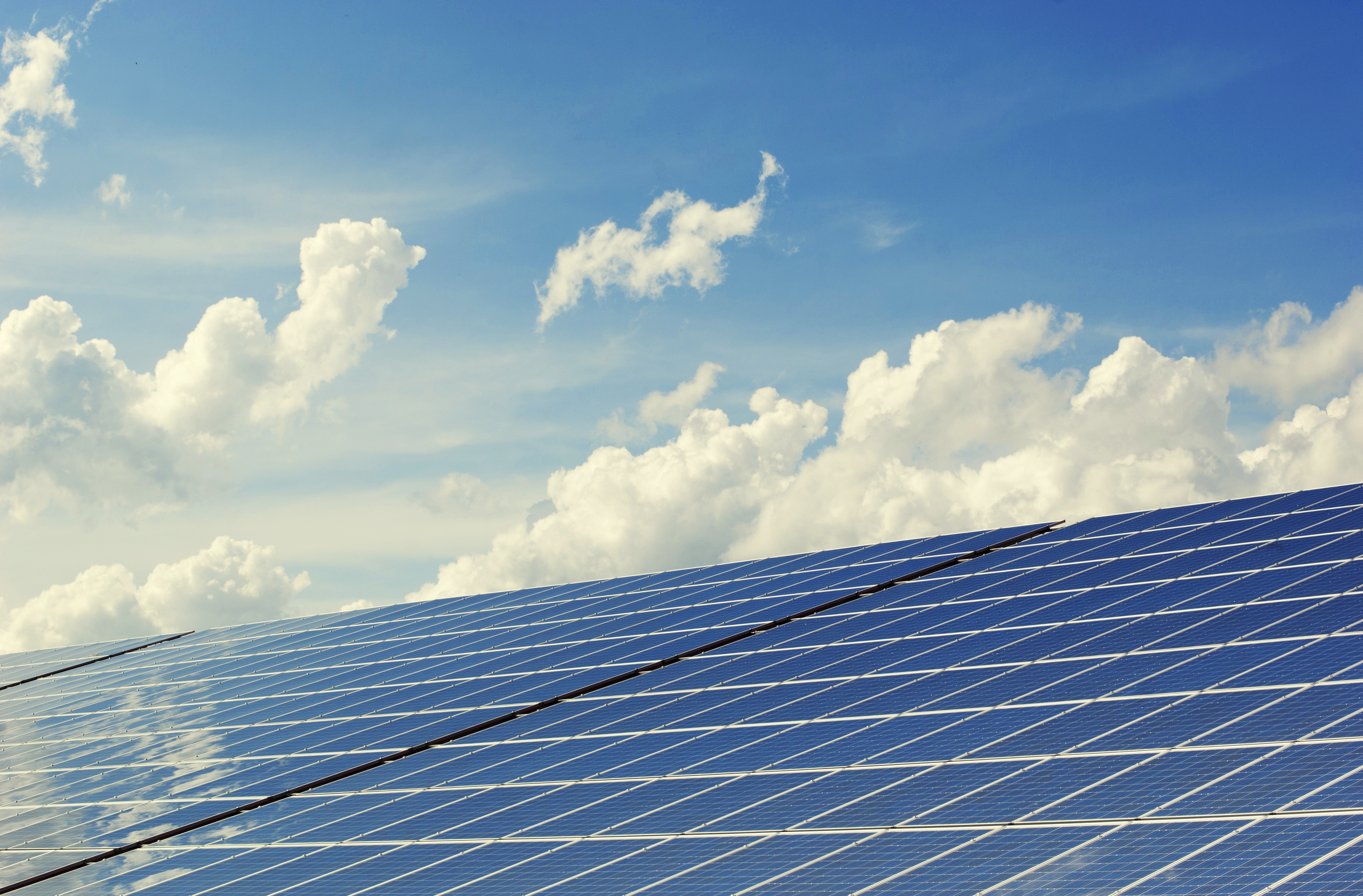
The Metropolitan Washington Airports Authority is conducting a study with the Domain energy Virginia on the usability of building a large scale 100-megawatt solar energy project. It's planned to be completed in 2023. The Dulles solar farm would take up approximately 1,200 acres and connect to Dominion Energy's transmission line. The solar project could power 25,000 homes at peak input.
Friday, February 14, 2020
Nation's Largest Municipal Solar Project Underway.
According to Electrical Contractor magazine Cincinnati released details of a plan to build the largest municipal solar array in the Unites States. The project will be able to provide enough electricity to power 25,000 homes everyday. The project will be installed 40 miles east of Cincinnati's downtown ans said to to take up approximately 1,000 acres and contain more than 310,000 solar panels.
Thursday, June 4, 2015
How American Businesses are Leading the Way in Green Building Technology

See how U.S. companies made the Shanghai Tower a shining example of green building. | Graphic by Matty Greene, Department of Energy.
In 2014, two daredevils broke into a construction site and climbed to the top of the second tallest building in the world: the Shanghai Tower. You may recognize it from their vertigo-inducing viral video, which leaves no doubt that the Tower is tall. What it doesn’t show is how much American businesses have had an impact on making the structure one of the greenest large buildings in the world.
Green buildings are more sustainable than conventional buildings by using fewer building materials, conserving energy and reducing waste. Thanks in large part to technologies from U.S. companies (and compared to conventional technologies) the approaches used in the Shanghai Tower:
- Reduce energy use by 21 percent
- Reduce water consumption by 40 percent
- Reduce the building’s carbon footprint by 34,000 metric tons per year, equivalent to taking more than 7,000 cars off the road.
From the architectural design and landscaping to temperature control and lighting, U.S. companies have made significant contributions to the Tower’s green design, which has earned a LEED Gold rating, as well as a China Green Building Three Star rating. Take a look at the graphic above to see some examples.
The Tower exemplifies how U.S. technology can drive economic growth while reducing carbon emissions, a path critical to addressing global climate change. As Secretary Moniz said in a recent speech, “Ultimately our focus is on the solutions to the climate-change challenge through technology. … American business will be called upon here to do the heavy lifting.”
That’s why 24 American companies are in China right now, joining Secretary of Commerce Penny Pritzker and Deputy Secretary of Energy Elizabeth Sherwood-Randall for a joint trade mission focused on smart cities and green infrastructure. The trip aims to follow through on the climate change goals laid out by President Obama and President Xi last November.
The Shanghai Tower is just one shining example of how U.S. companies are leading the way in green building technologies. In Shanghai and around the world, American innovation is scaling new heights when it comes to sustainability.

Pat Adams
Digital Content Specialist, Office of Public Affairs
Wednesday, May 13, 2015
Energy Storage May Already Make Sense for Many Commercial Customers

In the wake of Tesla’s recently announced entrance into the stationary energy storage market, there has been a wave of analysis of what this might mean for residential and commercial utility customers. The bulk of the headlines have centered on the sleek residential Powerwall, but far fewer have investigated the implications of Tesla’s commercial-scale product, the Powerpack. In a new report, titled US Solar & Alternative Energy: The Real Battery Storage Opportunity, the global financial research company UBS sees commercial and industrial (C&I) customers as the market opportunity for Tesla and other energy storage companies.
According to the report, the reason why residential systems may not offer as many economic benefits at this time, while C&I systems have the potential to net a positive return, has to do with how each customer segment is billed for its respective electricity use. Residential utility customers are billed based solely on the volume of electricity consumed, measured in kilowatt-hours (kWh). Commercial customers are also billed on a volumetric basis, but in addition, they pay a demand charge, a fixed charge calculated on the highest magnitude of electricity used each billing period, measured in kilowatts (kW). Demand charges can be significant, accounting for 35-40 percent of a C&I customer’s electricity bill in some parts of the country.
This maximum level of electricity demand is known as peak demand. By selectively discharging when a customer’s level of demand reaches a certain kilowatt threshold, energy storage can act to effectively cap peak demand — a process called peak shaving. The process is all managed through intelligent control system software, which can learn a building’s energy use trends over time to optimize energy storage performance accordingly. Reduced peak demand translates into fewer demand charges and lower customer utility bills.
So, residential customers do not pay demand charges, while commercial and industrial customers do. And it is in those demand charge markets where commercial battery storage will likely make the first foray — because reducing those charges is a straight economic play with a good rate of return. In fact, UBS estimates that energy storage as a way to reduce these demand charges is already economical in several U.S. markets, including parts of California and New York City.
The UBS report models the 20-year internal rate of return (IRR) for an energy storage system costing $400 per kWh, a price point UBS predicts will be reached by 2018. Tesla’s Powerpack is already approaching this target at about $50,000 installed cost for a 100 kWh system, or $500 per kWh. The report finds that energy storage systems begin to show a positive IRR at a demand charge of around $10 per kW. At a demand charges of $16 per kW, the IRR comes in at about 7 percent. A $20 per kW demand charge produces a return of about 12 percent. Demand charges in certain California and New York markets are already in the $30-$40 per kW range, meaning the economics are likely to be favorable even at today’s energy storage prices.
UBS goes on to note that additional value propositions, such as payments for participation in ancillary services and demand response programs, can further improve the economic argument in favor of energy storage.
One component that UBS fails to quantify, or even mention for C&I customers, is that energy storage systems can be set up to island, or disconnect from the grid, in the case of a grid outage. When islanded, energy storage can provide backup power for customers, allowing them to continue operations when the grid is down. While energy storage systems designed for demand charge reduction or ancillary services may not be able to power all of a facility’s systems throughout a power outage, they can certainly take on a reduced or critical load, augmenting the capabilities of existing backup generators and extending the lifetime of onsite fuel supplies during extended outages. When combined with solar power, a storage system could theoretically supply resilient power to critical loads for an unlimited duration.
In comparison to C&I customers, the UBS report finds that residential customers will have less financial incentive to purchase energy storage systems. UBS specifically examines the case of batteries for backup power as compared to fossil-fueled generators. Though the numbers for residential storage look less favorable as an alternative to natural gas generators, UBS fails to look beyond economics alone. The fact is, lithium-ion batteries offer a lot to like as opposed to generators. Generators can be ugly, noisy, and polluting, they are limited by available fuel supplies; and they emit carbon monoxide, a dangerous gas that can be fatal if not properly vented.
Lithium-ion batteries have no emissions, are quiet, and while looks aren’t everything…have you seen the new Tesla battery yet?
Lead image: Light bulbs. Credit: Shutterstock.
Friday, April 17, 2015
Solar Ready Vets: Preparing Our Veterans to Join the Growing Solar Workforce
The transition from military service into the civilian workforce can be a vulnerable moment.
Many veterans indicate that finding a job is one of the greatest challenges they face in their return to civilian life, and one aspect of that challenge is translating military skills and experience in a marketable way for civilian employers.
At the Department of Energy, we like to say we’re solutions people. And there is a great opportunity here to help by connecting our talented veterans with a dynamic sector in our economy that needs them. Solar electricity generation doubled last year alone, and the solar industry is adding jobs 10 times faster than the rest of the economy. That’s why the Department of Energy and the Department of Defense joined forces to create the Solar Ready Vets program, which provides training to help military personnel translate and build on their skill sets and transition to careers in this thriving renewable energy field.
http://energy.gov/articles/solar-ready-vets-preparing-our-veterans-join-growing-solar-workforce-0
Monday, March 30, 2015
HOW DO WIND TURBINES WORK?
#DidYouKnow a #wind turbine works like the opposite of a fan? Instead of using electricity to make wind, wind turbines use wind to make electricity. The wind turns the blades, which spin a shaft, which connects to a generator and makes electricity to power homes and businesses. Learn more about how wind turbines work ⇢
http://www.energy.gov/eere/wind/how-do-wind-turbines-

U.S. Department of Energy
http://www.energy.gov/eere/wind/how-do-wind-turbines-
U.S. Department of Energy
Wednesday, March 25, 2015
Amazing New Solar Panels Are Completely Transparent
Just so we’re totally clear, this is a huge deal. (Get it?)
posted on Aug. 27, 2014, at 3:51 p.m.
Monday, March 16, 2015
Wind Vision Report from the U.S. Dept. of Energy
With utility-scale turbines installed in nearly every state, wind is already a major source of clean, domestic power for the nation. But what if wind supplied 35 percent of the country's electricity by 2050? That's one of the scenarios highlighted in our new #WindVision report, a detailed roadmap for America's wind energy future. Learn more: http://go.usa.gov/3aHGF
http://go.usa.gov/3aHGF
Monday, March 2, 2015
Program to Help Businesses Save Energy
http://www.ppulse.com/Articles-The-Green-Page-c-2015-02-26-120299.114136-Program-to-Help-Businesses-Save-Energy.html
February 27, 2015
Businesses have an opportunity to save energy and reduce operating costs by participating in Focus on Energy's Business Incentive Program (BIP) and Renewable Energy Competitive Incentive Program (RECIP). Focus on Energy, Wisconsin utilities' statewide program for energy efficiency and renewable energy, is proud to offer cash-back incentives and technical expertise to energy-intensive businesses like Capital Brewery.Middleton-based Capital Brewery was founded in 1984 and has been brewing beer since 1986. The company worked with Focus on Energy and their utility, Madison Gas & Electric (MG&E), to complete two projects, including the installation of a 13 kW solar photovoltaic (PV) system and the installation of a high efficiency heat recovery system with controls. These equipment installations are helping the brewery save more than 19,000 kWh and 4,000 therms, resulting in a savings of more than $4,500 annually on their utility bill.
"It was the incentive and technical expertise from Focus on Energy that motivated us to do these projects," said Scott Weiner, president of Capital Brewery. "Capital Brewery is committed to sustainably brewing world class lagers and ales. We look forward to continuing our work with the Focus on Energy team and reducing our water and energy consumption as well as our carbon footprint."
"Breweries are a significant part of the industry and culture in Wisconsin," said Tamara Sondgeroth, director of operations for Focus on Energy. "By helping breweries make smart equipment choices combined with financial incentives, we are able to trim costs and help these businesses become more sustainable."
From lighting, to heating and cooling, and refrigeration systems, Focus on Energy offers both custom and prescriptive incentives to qualifying businesses. For more information on Focus on Energy's business programs, call 800.762.7077 or visit our focusonenergy.com.
Monday, February 23, 2015
Small Towns Achieve Big Savings with Lighting Upgrades
 |
| A worker installs energy efficient lights as part of the Smart Lights for Smart Cities program. | Photo courtesy of Mid-America Regional Council. |
Project Officer, Department of Energy.
Building on support from an Energy Efficiency and Conservation Block Grant (EECBG) via the Recovery Act, Mid-America Regional Council became a charter member of the Energy Department’s new Better Buildings High-Performance Outdoor Lighting Accelerator. Better Buildings Accelerators bring together public and private sector leaders and experts to solve some of the nation’s toughest energy challenges.
The High-Performance Outdoor Lighting Accelerator works with state and local municipalities nationwide to increase the adoption and use of high efficiency outdoor lighting in the public sector. Key program areas are replacing more than 500,000 outdoor lighting poles and developing best practice approaches to municipal system-wide upgrades.
An increasing number of states and municipalities are turning toward high efficiency outdoor lighting. There was nearly a two-fold increase of LED installed stock in outdoor applications from 2012 to 2013. New high performance lighting technologies offer approximately 50% energy savings and cost savings with lower operations and maintenance due to a longer lifespan. The cost savings is significant as outdoor lighting costs across the U.S. total approximately $10 billion a year.
Learn more about EECBG and The High-Performance Outdoor Lighting Accelerator.
Tuesday, February 17, 2015
Energy Efficient Upgrades - Lighting
Lighting is a critical component of every small business. Employees must be able to see to perform their jobs, and objects and spaces must be aesthetically pleasing to encourage sales.
Depending on the type of business you operate, lighting accounts for 20% to 50% of electricity consumption. This means that significant cost savings can be achieved with energy-efficiency improvements, and due to continually improving equipment, lighting usually provides the highest return-on-investment of major upgrades.
Monday, February 9, 2015
Fact or Fiction – LEDs don’t produce heat
http://www.ledsmagazine.com/articles/2005/05/fact-or-fiction-leds-don-t-produce-heat.html
Tuesday, February 3, 2015
Find Financing for Energy Efficient Upgrades
http://www.energy.gov/eere/buildings/find-financing-energy-efficiency-upgrades
Tuesday, January 27, 2015
New programs from Focus on Energy!!
Contact us to reduce your energy costs today!
https://focusonenergy.com/business/businessprogramupdates
https://focusonenergy.com/business/businessprogramupdates
Monday, January 19, 2015
Top 6 Things You Didn't Know About Solar Energy
This article is part of the Energy.gov series highlighting the "Top Things You Didn't Know About..." series. Be sure to check back for more entries soon.
6. Solar energy is the most abundant energy resource on earth – 173,000 terawatts of solar energy strikes the Earth continuously. That's more than 10,000 times the world's total energy use.
5. The first silicon solar cell, the precursor of all solar-powered devices, was built by Bell Laboratories in 1954. On page one of its April 26, 1954 issue, The New York Times proclaimed the milestone, “the beginning of a new era, leading eventually to the realization of one of mankind’s most cherished dreams -- the harnessing of the almost limitless energy of the sun for the uses of civilization.”
4. The space industry was an early adopter of solar technology. In the 1960s the space industry began to use solar technology to provide power aboard spacecrafts. The Vanguard 1 -- the first artificial earth satellite powered by solar cells -- remains the oldest manmade satellite in orbit – logging more than 6 billion miles.
3. Fast track to today and demand for solar in the United States is at an all time high. In the first quarter of 2012, developers installed 85 percent more solar panels compared to the first quarter of last year. Total U.S. installations may reach 3,300 megawatts this year – putting the country on track to be the fourth largest solar market in the world.
2. As prices continue to fall, solar energy is increasingly becoming an economical energy choice for American homeowners and businesses. Still, the biggest hurdle to affordable solar energy remains the soft costs – like permitting, zoning, and hooking a solar system up to the power gird. On average local permitting and inspection processes add more than $2,500 to the total cost of a solar energy system. The Energy Department SunShot Initiative works to aggressively drive down these soft costs – making it faster and cheaper for families and businesses to go solar.
1. In California’s Mojave Desert, the largest solar energy project in the world is currently under construction. The project relies on a technology known as solar thermal energy. Once the project is complete 350,000 mirrors will reflect light onto boilers. When the water boils, the steam turns a turbine, creating electricity. The project is expected to provide clean, renewable energy for 140,000 homes and is supported by an Energy Department loan guarantee. More details on the Energy Department’s investments in large scale, innovative renewable energy projects in this slideshow.
Want more solar? The National Renewable Energy Laboratory, Energy Information Administration, and Solar Energy Technologies Program are all great solar energy resources – for kids and adults alike.
Monday, January 12, 2015
Monday, December 1, 2014
LEDs: Lighting The Way To Major Energy Savings
LEDs: Lighting The Way To Major Energy Savings
Eric Savitz Eric Savitz , Forbes Staff
Guest post written by Chuck Swoboda
Chuck Swoboda is CEO of Cree, which makes LEDs and LED lighting products.
Chuck Swoboda
President Obama set what he considers an ambitious goal for reduced energy consumption during his State of the Union address Tuesday night: “Let’s cut in half the energy wasted by our homes and businesses over the next twenty years.”
Why wait so long?
The technology and economics to achieve much of this goal exist today. One of the most antiquated devices wasting power in your home right now is the light with which you’re reading this article. Your incandescent bulb is based on technology that is more than 130 years old, a light source that converts most of the bulb’s energy to heat rather than light.
American companies that build lighting based on modern technology – LEDs (Light Emitting Diodes) – can enable consumers to save money and slash their electricity usage for lighting by as much as 80 percent. Today. That change can achieve much of the President’s goal since lighting accounts for nearly one-fifth (19 percent) of electricity spending in the average household, according to the U.S. Department of Energy.
As consumers, we already rely upon LED lights in our cell phones and HDTVs. The barrier to the widespread use of efficient LEDs for lighting has been the high upfront cost of LED fixtures and bulbs. But now advancements in technology are dramatically lowering prices, so much so that a sub $10 LED bulb, which delivers brilliant, high quality light for more than a decade could soon be a reality.
LED lighting is already cost effective – extremely so – for businesses and municipalities.
The City of Los Angeles is saving $5.3 million annually thanks to the Green LA initiative that has thus far replaced 114,000 high-pressure sodium street lights with LED lighting, the nation’s largest such project. Once completed, Los Angeles anticipates LED lighting will save taxpayers $10-million-a-year, nearly two-thirds of what the city had been paying for lighting its streets.
Sheetz, the convenience store and gas station chain, ranked 61st on Forbes Magazine’s List of America’s Largest Private Companies, has installed LED interior and exterior lighting at more than 130 of its locations across six states. The energy savings: 45 percent on interior lighting, and as much as 55 percent on exterior lighting that illuminates Sheetz’s gas pumps. As expenses drop, LED lighting is helping boost top-line growth, according to Sheetz, which reports customers find the brighter facilities more visually appealing and perceive them as safer.
Such examples explain why LEDs accounted for 8 percent of the U.S. lighting market in 2012, according to McKinsey & Co., primarily in street lighting, retail and office environments.
Now it’s the consumer’s turn.
Fundamental advances in LED semiconductor technology, optics, and lighting system design now enable LED lights to break century old cost and performance barriers that have prevented consumers from realizing the savings businesses and municipalities already enjoy. While a typical incandescent bulb uses 60 watts of power to generate light, the current state of LED technology can produce the same light for less than 10 watts. A better, more efficient product means less expensive light. To a consumer, this means saving money – significant amounts of money.
As the cost factor shrinks, adoption of LED lighting climbs. The industry’s current rate of cost reduction could result in a doubling of LED lighting adoption over the next year. The shorter the payback on the upfront expenditure, the more likely consumers will choose LED lighting. We’ve already seen this trend in commercial lighting markets. As we approach price parity with traditional lighting, any remaining barriers for commercial and consumer adoption should continue to diminish, and we believe the rate of adoption will accelerate.
Not only does this trend result in better lighting that saves Americans money and time (imagine not changing a bulb for more than a decade), but it will also eliminate a tremendous amount of physical waste. According to IMS Research, collectively, 5.6 billion bulbs light American households and businesses, including 4.2 billion incandescent bulbs and about 1 billion compact fluorescent (CFL) bulbs that contain toxic mercury. More than 1 billion new bulbs are purchased every year.
The President’s own U.S. Department of Energy predicts the switch to LED lighting over the next two decades could save $250 billion in energy costs. There’s no need to wait.
Monday, November 17, 2014
Lumens are the New Watts
Using lumens as the measure of a light bulb’s brightness will simplify shopping for light bulbs…
By EARTHEASY.COM Posted AUG 17, 2011
Back in the old days, when there was only one basic type of light bulb consumers could buy, (the incandescent bulb descended from Edison’s original) we could rely on the term “watts” to help us choose the right bulb for our lamps and outdoor lights. Although “watts” refers to how much energy a bulb will use when lit, we understood the relative brightness levels between 60-watt, 100-watt or 150-watt light bulbs.
Then along came the energy-saving CFL bulbs A 15-watt CFL bulb, according to the package, produced the equivalent light of a 60-watt incandescent. A 25-watt CFL was comparable to a 100-watt incandescent in light output. And so forth. Shoppers were expected to understand the wattage conversions of these strange looking new CFL light bulbs.
LED bulbs, more efficient than CFLs, use even less wattage to achieve desired brightness levels
As we gradually got used to the idea of the CFL bulbs and began to understand how to choose the right CFL for our lighting needs, the new LED bulbs came into the mix. Originally used for small task lights such as flashlights and instrument lights, LED technology has evolved rapidly with new LED bulbs available for most applications in the home. LED bulbs, more efficient than CFLs, use even less wattage to achieve desired brightness levels. A 6-watt LED is equivalent to a 15-watt CFL which is equivalent to a 60-watt incandescent bulb.
It’s getting confusing isn’t it?
And besides three different wattage equivalents for the three basic types of light bulbs on store shelves, there are new halogen incandescent bulbs, new LED tube lights, and terms like Coloring Rendering Index (CRI) and Correlated Color Temperature (CCT) which further describe characteristics of light quality from a bulb.
the FTC has mandated packaging changes for all light bulbs, effective in 2012, which simplify and standardize the differences in light bulb output
To help shoppers make sense of the many choices in lighting today, the FTC has mandated packaging changes for all light bulbs, effective in 2012, which simplify and standardize the differences in light bulb output. Wattage is no longer a reliable way to gauge a light bulb’s brightness. Lumens, the measure of a bulb’s actual brightness, is the new standard for comparing light bulbs of all types.
Lumens, the measure of a bulb’s actual brightness, is the new standard for comparing light bulbs of all types
Lumens measure brightness. A standard 60-watt incandescent bulb, for example, produces about 800 lumens of light. By comparison, a CFL bulb produces that same 800 lumens using less than 15 watts. But you don’t need to understand yet another conversion. It’s simple. The more lumens, the brighter the bulb.
You can use lumens to compare the brightness of any bulb, regardless of the technology behind it, and regardless of whether it’s a halogen incandescent, CFL or LED. Using lumens helps you compare “apples to apples” when you shop for light bulbs. Once you know how bright a bulb you want, you can compare other factors, like the yearly energy cost.
Monday, November 10, 2014
Tuesday, November 4, 2014
There is still time to cash in on incentives from Focus on Energy. Please consider us for all your lighting needs.
https://focusonenergy.com/business/efficient-equipment/lighting
https://focusonenergy.com/business/efficient-equipment/lighting
Monday, October 27, 2014
Rural Energy for America Program - Renewable Energy System and Energy Efficiency Improvement Guaranteed Loan and Grant Program
The Rural Energy for America Program (REAP) provides financial assistance to agricultural producers and rural small businesses in rural America to purchase, install, and construct renewable energy systems; make energy efficiency improvements to non-residential buildings and facilities; use renewable technologies that reduce energy consumption; and participate in energy audits, renewable energy development assistance, and feasibility studies.
Monday, October 20, 2014
What will lighting systems look like in 2020?
According to Greg Merritt, Vice President, Marketing, Lighting at Cree, Inc., "Every lighting solution will be LED, and every lighting solution will offer some type of automated intelligence. More contractors and even distributors will develop their own design and specifying capabilities."
Electrical Contractor Magazine 10/14
Electrical Contractor Magazine 10/14
Monday, October 13, 2014
IEA Report Predicts Solar Power Domination by 2050
Two reports released simultaneously last week by the International Energy Agency (IEA) say that by the year 2050, solar power could eclipse fossil fuels, hydro, wind and nuclear as the world’s most widely used source of electricity generation.
Utah, USA -- According to the IEA, solar PV could conceivably be used to generate as much as 16 percent of the world’s electricity needs by mid-century, with solar thermal electricity generated by concentrating solar plants (CSP) accounting for another 11 percent.
The reports state that when combined, PV and CSP could cut annual carbon dioxide emissions by more than 6 billion tonnes – effectively equaling the current output of worldwide transportation emissions and exceeding all CO2 emissions produced in the U.S. today.
According to Technology Roadmap: Solar Photovoltaic Energy, a decrease in the emission of 4 billion tonnes of CO2 per year could occur with worldwide installation of 4,600 GW of PV capacity by 2050. In order for this to occur, total PV capacity will have to reach an average of 124 GW per year, rising to 200 GW per year between 2025 and 2040.
Scott Sklar, chair of the Steering Committee of the Sustainable Energy Coalition and president of The Stella Group, says these targets in PV capacity are entirely within the realm of possibility. “I do think PV can hit these growth levels,” Sklar said, adding that a combination of “reduced loads and storage” – in addition to the use of other renewable energy sources like biomass – will have to be factored into the overall equation to achieve round-the-clock power generation.
By the beginning of 2014, total worldwide PV capacity had surpassed 150 GW and the IEA reports an estimated 100 GW of capacity being installed on a daily basis throughout 2014. “Massive cost reductions” were cited for the exponential growth, which saw more PV capacity installed in the last four years than in the last 40 years combined. The IEA believes the cost of PV will continue to drop, eventually hitting a cost decrease of 65 percent by 2050.
Sklar is also confident PV cost will plunge, if not quite by the margins predicted by the IEA. “Just by the aggregation of purchasing of materials, and scale-up of both module manufacturing and delivery chain, we can reduce costs at least by 50 percent by 2050,” Sklar said. “Possibly more.”
The second report, Technology Roadmap: Solar Thermal Electricity, stresses the inherent abilities of concentrating solar plants (CSP) to store thermal energy and provide necessary backup power on during peak times, on cloudy days, and overnight. Currently, the sum total of global solar thermal deployment is 4 GW – but the report projects with the installation of 1,000 GW of CSP capacity by 2050, 2.1 billion tonnes of CO2 emissions could be eliminated every year.
Additional deployment is expected to occur as a result of developing markets throughout Africa, Australia, China, India, the Middle East, and North and South America.
Frequently looked on as two competing technologies, the IEA sees PV and solar thermal energy ultimately achieving a complementary relationship that will serve to make up for the shortcomings of PV on overcast days and through non-daylight hours.
Friday, October 3, 2014
80' Wind Turbine Install
We are pleased to announce that we are in the process of installing a Bergey Wind Power Turbine that will stand 80' tall at a farm in McHenry County.
Below are some Interesting facts about Wind Energy from the Wind Energy Foundation www.windenergyfoundation.org
Below are some Interesting facts about Wind Energy from the Wind Energy Foundation www.windenergyfoundation.org
Interesting Wind Energy Facts
#1. The United States currently has 61,110 MW of installed wind project capacity, comprising 5.7% of total U.S. installed electric generating capacity.
#2. Wind mills have been in use since 2000 B.C. and were first developed in China and Persia.
#3. Wind power is currently the fastest-growing source of electricity production in the world.
#4. Iowa and South Dakota generated more than 25% of their energy from wind during 2013.
#5. A single wind turbine can power 500 homes.
#6. In 2012, the Shepherds Flat wind project became the largest online wind project in the United States (845 megawatts), breaking the record previously held by the Roscoe Wind Farm (781.5 megawatts).
#7. In 2013, the roughly 168 million megawatt-hours generated by wind energy avoided 95.6 million metric tons of carbon dioxide (CO2) — the equivalent of reducing power-sector CO2 emissions by 4.4% or removing 16.9 million cars from the roads.
#8. There’s enough on-shore wind in America to power the country 10 times over.
#9. In 2013, 12 states accounted for 80% of U.S. wind-generated electricity: Texas, Iowa, California, Oklahoma, Illinois, Kansas, Minnesota, Oregon, Colorado, Washington, North Dakota, and Wyoming. Source: U.S. Energy Information Administration March Electric Power Monthly report.
#10. Most wind turbines (95%) are installed on private land.
#11. Modern wind turbines produce 15 times more electricity than the typical turbine did in 1990.
#12. At times, wind energy produces as much as 25% of the electricity on the Texas power grid.
#13. American wind power is a $10 billion a year industry.
#14. Unlike nearly every other form of energy, wind power uses virtually no water.
#15. By 2030, U.S. wind power will save nearly 30 trillion bottles of water.
#16. At times, wind power produces as much as 45% of the electricity in Spain.
#17. Wind energy became the number-one source of new U.S. electricity-generating capacity for the first time in 2012, providing some 42% of all new generating capacity. In fact, 2012 was a strong year for all renewables, as together they accounted for more than 55% of all new U.S. generating capacity.
#18. During 2013, California led the nation in new wind installations (with 269 megawatts), followed by Kansas, Michigan, Texas, and New York.
#19. 70% of all U.S. Congressional Districts are home to an operating wind project, a wind-related manufacturing facility, or both.
#20. As of May 2014, the United States is home to 46,000 operating wind turbines.
#21. Right now, 559 wind-related manufacturing facilities produce a product for the U.S. wind energy industry across 44 states.
#22. Both Nevada and Puerto Rico added their first utility-scale projects during 2012.
#23. In 2000, more than 60% of U.S. wind power capacity was installed in California, with 17 states hosting utility-scale wind turbines. Today, 39 states and Puerto Rico share 60 gigawatts of utility-scale wind project development.
#24. Wind is a credible source of new electricity generation in the United States. Wind power comprised 43% of all new U.S. electric capacity additions in 2012 and represented $25 billion in new investment. Wind power currently contributes more than 12% of total electricity generation in nine states (with three of these states above 20%), and provides more than 4% of total U.S. electricity supply. Source: 2012 Wind Technologies Market Report (PDF 3.4 MB)
#25. Wind energy prices have dropped since 2009 and now rival previous lows. Lower wind turbine prices and installed project costs, along with improved capacity factors, are enabling aggressive wind power pricing. After topping out at nearly $70/megawatt-hour in 2009, the average levelized long-term price from wind power sales agreements signed in 2011/2012 – many of which were for projects built in 2012 – fell to around $40/megawatt-hour nationwide.
Subscribe to:
Posts (Atom)